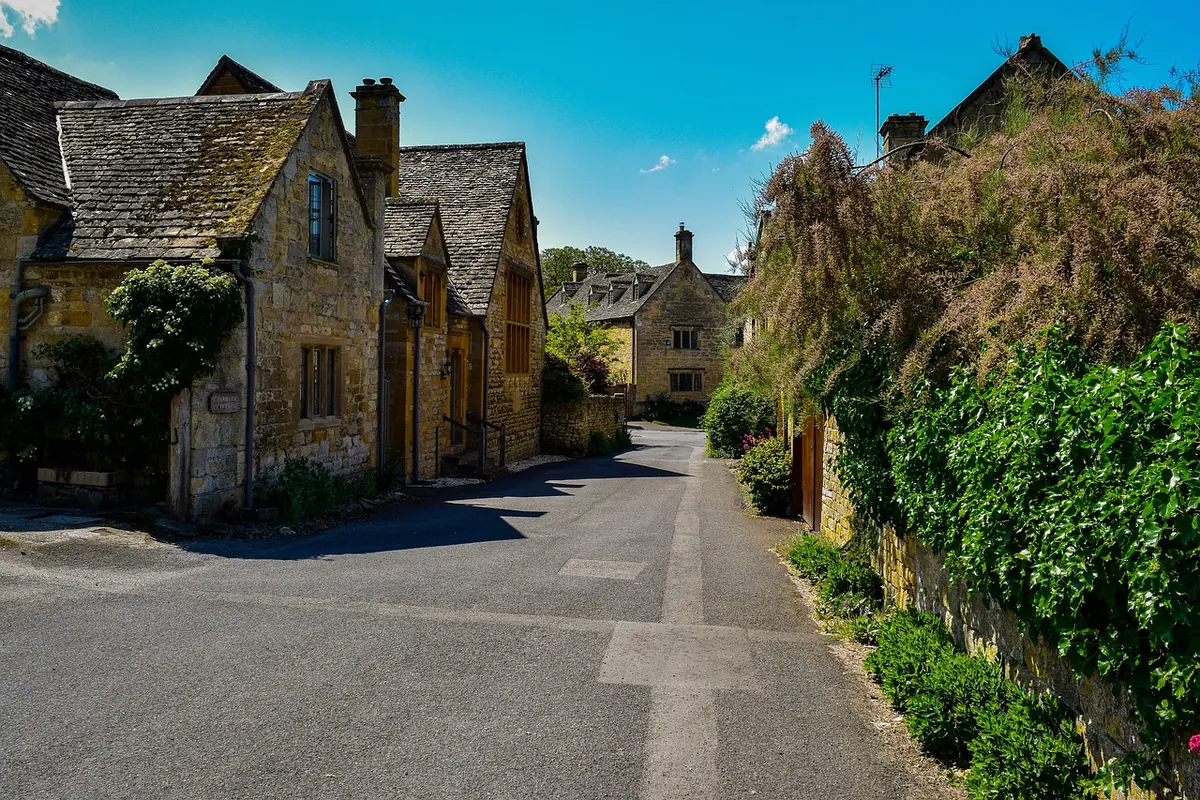
There is a version of the Cotswolds that involves no hire car, no white-knuckle reverse along a single-track lane and no forty-minute hunt for a parking space in Stow. It runs on two rail lines, a handful of buses and your own feet. The trick is choosing the right base, accepting that the last bus leaves earlier than you would like, and treating the timetable as part of the trip rather than an obstacle.
Start with the Trains
The Cotswold Line is the backbone of a car-free break. Great Western Railway runs from London Paddington through Oxford, Hanborough, Charlbury, Kingham and Moreton-in-Marsh before carrying on towards Evesham and Worcester. Moreton-in-Marsh is the most useful arrival point in the north Cotswolds: it sits on the edge of the hills and doubles as the area's bus interchange. Charlbury and Kingham are quieter and prettier, but not every train stops at Kingham, so check your specific service rather than assuming the hourly pattern applies.
Coming from elsewhere, the useful gateways are Swindon on the Great Western main line, which has onward buses towards Cirencester; Kemble, a few miles outside Cirencester itself; Oxford for the eastern side of the region and Woodstock; and Cheltenham Spa for the western edge. Stroud works well if you want the southern valleys around Painswick and Nailsworth.
On fares, Advance tickets tied to a specific train are usually the cheapest way to do a longer journey, while an off-peak return is the simpler buy if you want to change plans. Weekend engineering work is common on this line, so confirm your route a week out and again the day before.
Buses: Fewer Than You Hope, Better Than You Fear
Pulhams Coaches and Stagecoach West do most of the heavy lifting. From Moreton-in-Marsh, buses fan out towards Stow-on-the-Wold, Bourton-on-the-Water, Chipping Campden and Cheltenham, which covers a lot of ground without a car. On the eastern side, frequent services connect Oxford with Woodstock and Chipping Norton, which makes a Blenheim day out genuinely easy.
Two honest caveats. First, service numbers and timetables get revised, often in spring and again at the start of the school year, so use the operator's own published timetable rather than a third-party app, and screenshot it before you leave the house. Second, Sunday services are patchy to nonexistent, and the last bus out of many popular villages goes between mid-afternoon and early evening. Plan your day around that, not the other way round.
Rover-style tickets covering both trains and buses in the area have existed for years under names such as the Cotswolds Discoverer. They can be good value, but check current validity and sales points before you build a plan around one.
Choose a Base Before You Choose a Village
Where you sleep matters more than which villages you tick off. Aim for somewhere you can walk out of at eight in the morning and find a bus stop within ten minutes.
- Moreton-in-Marsh: station, buses and shops in one place. Not the prettiest town in the region, but the most practical.
- Stow-on-the-Wold: central, well served by buses, and walkable to Lower Slaughter and the Slaughters' footpaths.
- Bourton-on-the-Water: excellent bus links and riverside walks, though it is heaving in high summer.
- Chipping Campden or Broadway: the postcard version of the Cotswolds, with the Cotswold Way on the doorstep, but fewer and slower buses.
- Charlbury or Kingham: quiet, handsome and rail-connected, with thin onward bus options.
- Cirencester or Cheltenham: proper towns with year-round transport, food and wet-weather options.
A Two-Day Plan That Actually Works
Day one: Moreton-in-Marsh to Stow, on foot
Arrive into Moreton-in-Marsh, drop your bag, and walk the waymarked path north to Stow-on-the-Wold — roughly five miles across fields, with the Fosse Way for company. If the weather turns, the bus does the same journey in about fifteen minutes. Spend the afternoon in Stow, then walk out to Lower Slaughter and back along the River Eye before dinner. Stay in Stow.
Day two: Bourton, then the Cotswold Way
Take an early bus to Bourton-on-the-Water, walk the short riverside path to the Slaughters while the coach parties are still parking, then catch a bus onward towards Broadway or Chipping Campden. If the connection works, walk the Cotswold Way between Chipping Campden and Broadway, taking in Broadway Tower on the ridge — around six miles, mostly gentle, with one stiff pull. If it does not, pick one village and do it properly instead of racing between two.
Build in one slow hour a day. Timetables wobble, and the best moments of a car-free Cotswolds weekend tend to happen while you are sitting on a village bench waiting for a bus.
What to Pack
Cotswold stone looks lovely and turns greasy underfoot after rain, and many footpaths cross clay and pasture that hold water for days.
- Waterproof jacket and shoes with real grip — not smooth-soled trainers
- Layers, including a warm mid-layer even in summer
- A soft holdall rather than a hard-wheeled case; stiles, gravel and narrow pavements make trolley wheels a nuisance
- Refillable water bottle, snacks and a small daypack
- Power bank, offline maps and screenshotted timetables — signal is patchy between villages
- A little cash for small shops and honesty boxes
Booking Tips Worth Knowing
- Book train tickets in advance where Advance fares apply, and never plan a tight connection onto a rural bus.
- Ask your accommodation for the nearest bus stop and the name of a local taxi firm, then save the number offline.
- Many village pubs stop serving food between roughly mid-afternoon and early evening. Book dinner and Sunday lunch ahead.
- Pre-book taxis for evenings; do not expect one to be waiting in a village square at ten at night.
- Check the day you are travelling. Bank holidays, school holidays and Sundays all change what runs.
The Night Before You Go
Spend twenty minutes on this and the whole weekend relaxes. Confirm your trains, confirm the buses for the specific day, save one taxi number, and write down the first and last bus for each village you plan to visit. Then decide which single thing you would drop if the timetable falls apart — because on a car-free Cotswolds break, one well-walked village beats three rushed ones every time.
Photo: HarryJBurgess / Pixabay